Regeneratively Raised and Rotationally Grazed
At Whey Cool Ranch, regenerative farming is at the heart of everything we do. Our approach creates healthier soil, happier animals, and exceptional milk quality.
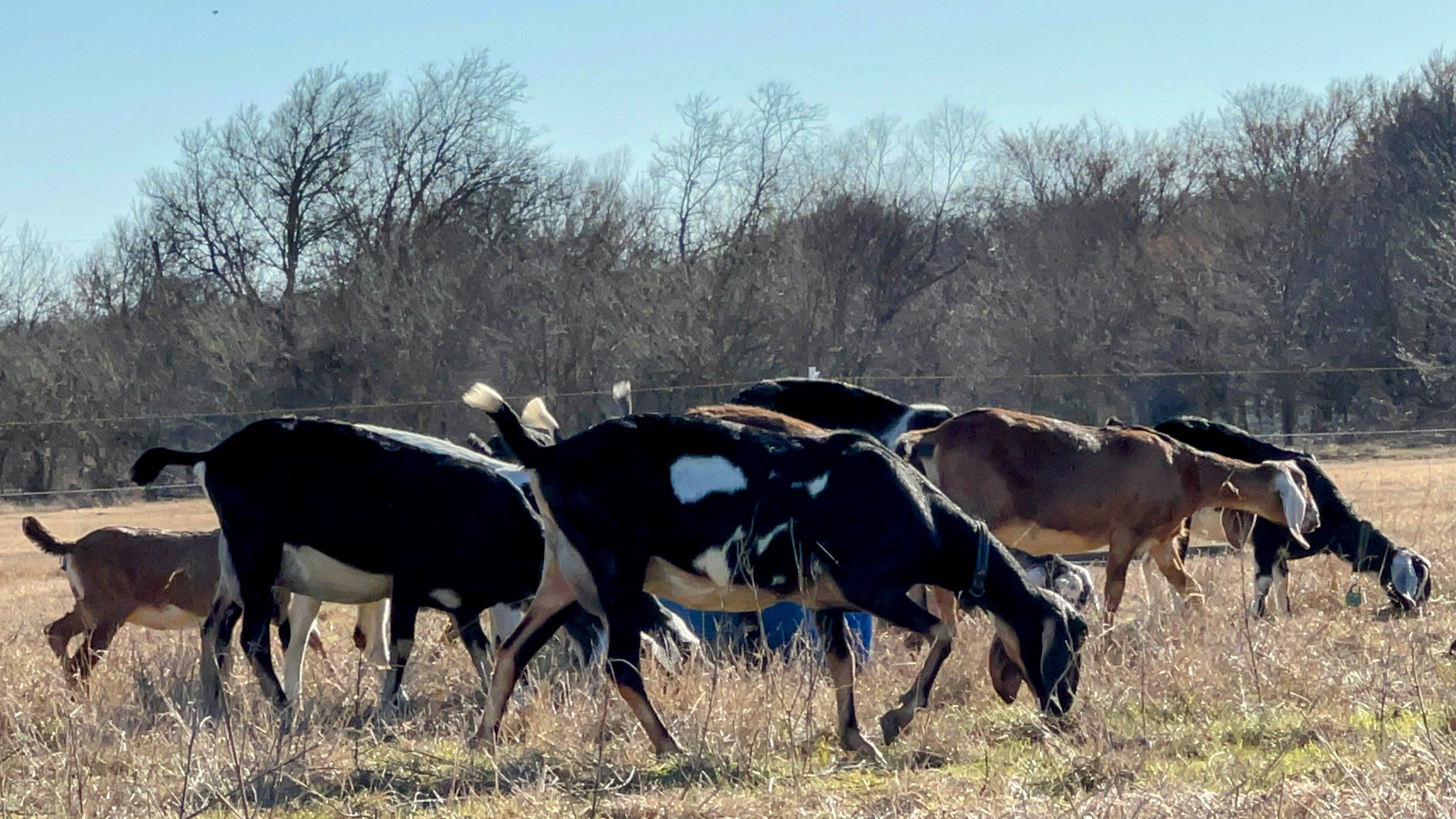
Rotationally Grazed
Animals move regularly to fresh pasture, preventing overgrazing and allowing land to recover.
Diverse Pastures
Our goats browse a wide variety of plants, supporting biodiversity and optimal nutrition. Although it will likely take a decade, we’re working on actively restoring native Blackland Prairie habitat through targeted seeding of native plants.
Minimal Inputs
We avoid synthetic fertilizers and pesticides whenever possible, relying on natural ecosystem balance.

Who’s Behind the Logo
Whey Cool Ranch is more than a dairy—it’s the result of a deeply personal journey. Shaped by Megan’s triumph over cancer, the Clarks’ shared love of land and animals, and a commitment to living in harmony with nature, the family now stewards 23 regeneratively managed acres of Blackland Prairie in Hunt County, Texas. Their story is one of renewal, resilience, and a belief that healthy land creates healthy food and healthy communities.
Deep Roots in Rural America
Jeremiah and Megan Clark both grew up with dirt under their nails and livestock at their sides.
- Jeremiah was raised on a homestead in Ohio, tending cattle, chickens, pigs, and a large family garden.
- Megan grew up in Indiana with La Mancha, Nubian, and registered Grade dairy goats. She showed goats in 4H, apprenticed as a dairy goat judge in the 1980s, and spent countless hours shadowing her step‑uncle, a large‑animal veterinarian.
Their early experiences shaped a lifelong respect for animals, agriculture, and the rhythms of rural life.
Early Farming Adventures
After marrying in the early 2000s, the Clarks farmed nearly 70 acres in the Appalachian foothills of Ohio. They raised Boer goats to help pay their way through college, and Jeremiah—initially indifferent to goats—quickly fell in love with the animals.
They continued farming until a career opportunity required relocation, but the desire to return to the land never left.
A Journey Shaped by Health
Megan’s health challenges profoundly influenced the direction of their farm.
At 19, she was diagnosed with endometriosis. By 27, she had endured thirteen major surgeries and multiple miscarriages. Physicians at Indiana University Hospital linked her condition to glyphosate exposure from the pesticide‑intensive corn and soybean fields surrounding her childhood home.
Later, autoimmune disease and chronic migraines pushed her to seek answers beyond conventional medicine. Drawing on her biology background, she adopted a paleo diet—an approach that dramatically improved her health, especially after moving to California where fresh, organic food was abundant.
Triumph Over Cancer
In 2018, Megan was diagnosed with stage 3A triple‑negative breast cancer—a walnut sized tumor and a daunting prognosis. Using her research skills and working closely with her oncologist, she integrated a ketogenic diet and fasting alongside chemotherapy.
The result was complete remission.
This experience cemented her belief that food is medicine and that nature, when respected, has extraordinary healing power. It also strengthened her commitment to chemical‑free farming and regenerative agriculture, echoing her stepfather’s wisdom:
“Don’t fight Mother Nature—no matter how much money you throw at it, you’ll never win.”
Whey Cool Ranch Today
Today, the Clarks steward 23 acres of native Blackland Prairie in Hunt County, Texas. Their approach is simple: work with nature, not against it.
They chose Nubian dairy goats and Miniature Zebu cattle for their heat tolerance, gentle temperaments, and ability to thrive on diverse vegetation. These species aren’t just livestock—they’re partners in restoring the land.
Choosing climate‑appropriate breeds is a core principle at Whey Cool Ranch.
For example, although they love the big, fluffy look of Brahma chickens, they raise Egyptian Fayoumis for eggs—a small, sleek, heat‑adapted breed perfectly suited to Texas summers.
Regenerative Stewardship
When the Clarks first walked the property, half of it sat under standing water for nearly six months of the year. The area was choked with dense trees that blocked sunlight and prevented any understory from growing.
With careful planning and the help of a forestry mulcher, that section has been transformed into a native silvopasture—open enough for sunlight, shaded enough for comfort, and diverse enough to support healthy grazing.
These regenerative efforts have already:
- Improved soil structure.
- Reduced flooding.
- Increased plant diversity.
- Enhanced wildlife habitat.
The land is healing—and the animals are part of that process.
Community & Quality Milk
Megan’s passion for nutrient‑dense, clean milk led to a thriving herd share program and eventually to licensing as a Texas Grade‑A Raw‑for‑Retail dairy. Today, community members enjoy fresh, flavorful raw goat milk for drinking, cheesemaking, and crafting homemade treats.
By producing real food, supporting sustainable agriculture, and restoring the local ecosystem, the Clarks hope to strengthen the health and resilience of their community.
Beginning in spring 2026, the ranch will also offer pasture‑fed goat meat, vegetables, and organic eggs, with raw cow’s milk and beef planned within the next few years.


